
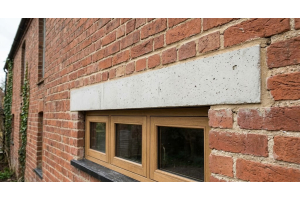
It’s easy to appreciate the job lintels do, but not really give them much thought. Now, as things have developed, it’s useful for us to look at them in a different way, mainly due to energy performance requirements tightening.
Lintels matter far more than they used to; they’re now deemed one of the most important aspects of a standard specification on West Yorkshire new builds.
What a Thermal Break Actually Does
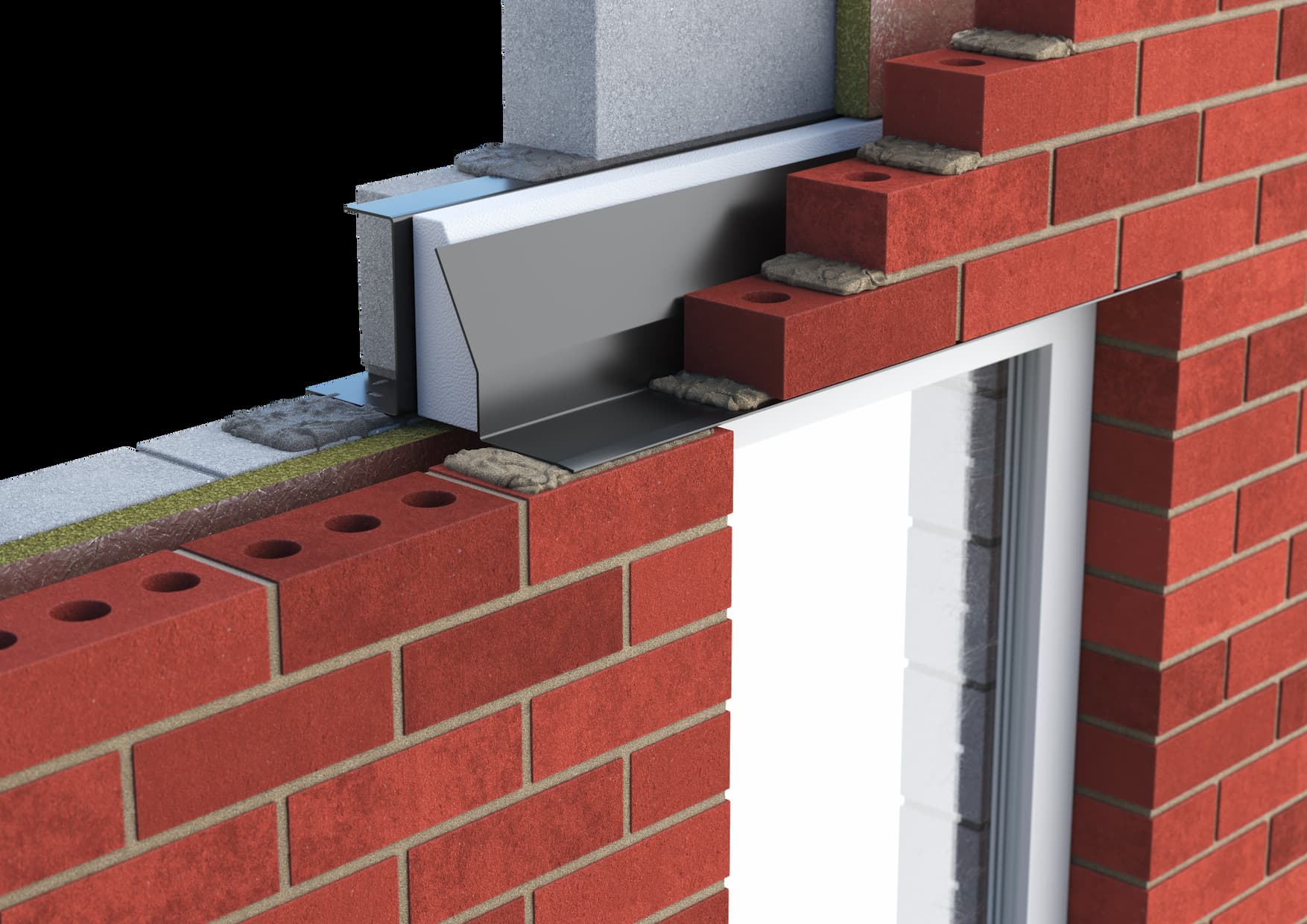
You’ll tend to find standard cavity wall lintels have a steel body that continues across the full wall width.
Steel is able to conduct heat well, meaning it creates a direct route for warmth to exit through the wall. This is thermal bridging. The main places it happens are in window and door heads.
A thermally broken lintel interrupts the steel with a physical break filled with insulating material, so the inner and outer leaves are no longer connected by a conductive metal path. The psi value, which is how heat loss at a junction is measured, can drop from 0.5 W/mK on a standard open-back cavity lintel down to as low as 0.02 W/mK, a massive difference.
How Thermal Breakings Affect SAP Calculations
Every new residential build needs a SAP assessment, and thermal bridging at junctions feeds directly into it. Specifying thermally broken lintels across all your openings will help boost your overall fabric energy efficiency in a measurable manner.
When you cost plan, these lintels can offer flexibility in different parts of the specs. On a typical new build with eight to ten openings, the upgrade to thermally broken lintels could allow you to reduce your cavity width from 150mm to 100mm, and the saving in insulation and brickwork tolerances across the whole job often absorbs the cost of the lintels themselves.
We tend to recommend discussing that with the architect from the beginning.
The Condensation Issue
Cold bridges do more than waste heat. If the internal surface temperature drops at a junction, condensation forms, and in an enclosed wall or reveal, mould follows.
Anyone who has worked on older Yorkshire housing stock will have seen it around window heads, and beyond the cosmetic damage it causes, persistent mould is a callback problem for builders.
Thermally broken lintels keep internal surface temperatures high enough that condensation risk is effectively eliminated at the junction. That is a problem quietly removed before it ever becomes yours to deal with.
Singles Lintels are Often Most Effective
The alternative to a one-piece thermally broken lintel is a pair of separate lintels, one for each leaf, plus a cavity tray and a cavity closer at the head.
That is four items to specify, order, and install, and inner and outer lintels cannot go in at the same time, which means propping time and slower lifts. Any material saving on the lintels themselves tends to disappear once you factor in the extra labour and programme time.
A single thermally broken lintel does all of it in one piece and installs the same way as any standard cavity lintel.
Order Lintels in Bradford
Future Homes Standard requirements demand better fabric performance than past Part L, with thermal bridging under closer scrutiny. For builders running active programmes across Bradford, Leeds, Wakefield, and the surrounding area, getting thermally broken lintels into your standard spec is important.
We’re here to help if you need any guidance when it comes to lintels, with a range of options available; contact us.