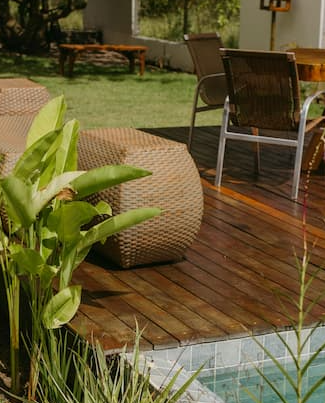
Too often, we see homeowners look at their uneven outdoor space and jump to the assumption that decking isn’t a viable option for them. The reality is that decking is definitely a possibility, with the right approach.
If you’re interested in laying decking outside, but are unsure of how to navigate the process on uneven ground, read on. This is how to build decking on a slope, helping you pick the right method before you actually go ahead with buying things.
Which Method Do You Need?
The method isn’t a one-size-fits-all one when it comes to uneven ground:
Ground-level deck (gentle unevenness, under 300mm variation)
Use adjustable deck feet on a compacted MOT sub-base. The feet screw up and down to compensate for dips and bumps without any post digging.
Raised deck on a slope (300mm+ drop or significant gradient)
You need a post-and-bearer frame. Posts are set at varying heights into concrete footings, carrying a level frame above the uneven ground below.
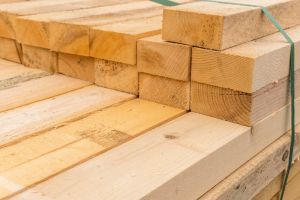
Vac-vac treated timber is timber that has been preserved using a double-vacuum process: air is first drawn out of the timber under vacuum, preservative is then introduced into the chamber, and a second vacuum follows to remove any excess chemical. This leaves the wood protected but with a lighter, drier finish than full pressure-treated alternatives.
It's a method that often gets overlooked in favour of tanalised timber, but for the right application, vac-vac is actually the smarter choice. Here's what you need to know.
How the Vac-Vac Process Works
Traditional pressure treatment forces preservative deep into the timber under sustained positive pressure. Vac-vac takes a different approach:
Vacuum 1: The chamber is evacuated, drawing air out of the timber's cells
Preservative fill: The chamber is flooded with preservative solution
Vacuum 2: A second vacuum removes excess preservative from the surface
The result is timber with good preservative penetration in the outer zones, but without