
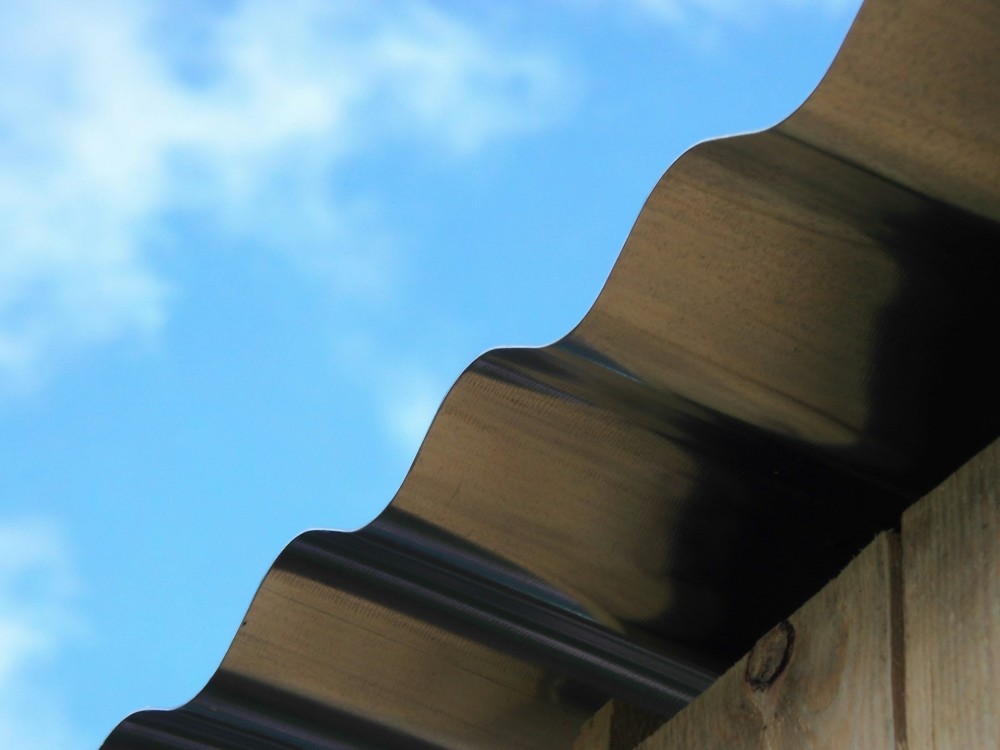
Corrugated roofing sheets come with many benefits. Not only are they affordable and quick to install, but they’re also available in numerous materials, which means they’re viable for an array of roofing projects, working well for outbuildings, garages, sheds, and agricultural buildings.
Are you looking for a breakdown of which material to go for? That comes down to a few factors. Let’s explore them in more detail.
Steel and Galvanised Corrugated Roofing Sheets
Steel corrugated sheets are usually supplied with a galvanised or polyester coating, and they’re the workhorse of the range. You’ll often find them in agricultural buildings and large garages, essentially any structure that needs to handle adverse weather for decades.
- Typical uses: They’re a fantastic option for barns, farm buildings, garages, industrial units and larger outbuildings.
- Lifespan: 25 years or more with a quality galvanised finish. Hot-dip galvanised steel holds up particularly well in exposed locations.
- Price range: From around £20 per sheet, depending on thickness (gauge) and coating.
The main trade-off with metal corrugated roofing sheets is weight. Steel sheets are heavier than the alternatives, so your supporting structure needs to be up to the job. They can also be noisy in heavy rain unless insulation is added.
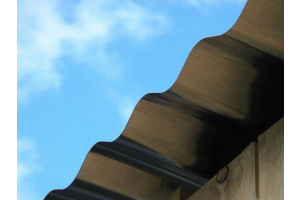
Corrugated Bitumen Roofing Sheets
Corrugated bitumen roofing sheets are a popular choice for sheds, garden buildings and smaller outbuildings.
- Typical uses: Ideal for arden sheds, log stores, summer houses and small outbuildings.
- Lifespan: It lasts 15 to 20 years under normal conditions.
- Price range: Bitumen roofing sheets are one of the least expensive, at around £12 per sheet.
They're lighter than steel, easy to cut and handle, and straightforward to fix with roofing nails or screws.
Corrugated Plastic Roofing Sheets
Corrugated plastic roofing sheets, including clear polycarbonate and translucent options, are ideal where you want to let light in. Lean-tos, covered walkways, greenhouses and side extensions all benefit from the light transmission you get with plastic sheeting.
- Typical uses: Lean-tos, car ports, pergolas, greenhouse roofing and sections where natural light is needed.
- Lifespan: 10 to 20 years, depending on UV protection and thickness. Opt for UV-stabilised sheets to avoid yellowing and brittleness over time.
- Price range: From around £15 per sheet.
Clear corrugated roofing sheets are the lightest of the three materials and simple to work with using standard tools. The downside is that they offer little insulation on their own, so they're best suited to unheated spaces.
Side-by-Side Comparison of Steel vs Bitumen vs Plastic
Feature | Steel / Galvanised | Bitumen | Plastic / Polycarbonate |
Typical Lifespan | 25+ years | 15 to 20 years | 10 to 20 years |
Weight | Heavy | Medium | Light |
Best For | Garages, agricultural | Sheds, outbuildings | Lean-tos, glazed sections |
Insulation | Low | Medium | Low |
Indicative Price | From £20 per sheet | From £12 per sheet | From £15 per sheet |
Sizes and Coverage
For the most part, corrugated roofing sheets are 2440mm x 762mm (8ft x 2.5ft), but lengths up to 3000mm are available for larger spans.
When calculating how many sheets you need, start with the roof area and factor in overlap. Corrugated sheets are usually lapped by one corrugation on each side edge and around 150mm at the end laps.
Here is how to estimate:
Measure the roof width and divide by the effective cover width of a sheet (usually around 660 to 690mm after overlap, depending on profile).
Measure the roof length and divide by the effective sheet length after the end lap.
Round up to the nearest whole number and add 5 to 10% for cuts and waste.
Choosing Corrugated Roofing Sheets
Choosing the right corrugated roofing sheet comes down to three things: the type of structure, how long you need it to last, and your budget. Steel is the most durable option and suits garages, farm buildings, and anywhere that needs to withstand years of exposure. Bitumen is the practical and budget friendly choice for garden sheds and smaller outbuildings. Plastic works best where natural light is a priority, such as lean-tos and covered walkways.
All three materials are straightforward to install, widely available in standard sizes, and much cheaper than alternative roofing solutions. When you find the right material, corrugated roofs do the job for years to come.
Frequently Asked Questions
What is the best corrugated roofing sheet for a garden shed?
For most garden sheds, corrugated bitumen sheets are the most popular choice. They're lightweight, easy to cut on site and competitively priced. If your shed has an open or lean-to section where natural light matters, clear plastic corrugated sheets work well for that part of the roof.
How long do corrugated bitumen roofing sheets last?
Corrugated bitumen sheets typically last 15 to 20 years. Longevity depends on exposure to the elements, how well the fixings are sealed and whether the sheets were installed with adequate fall (slope) to shed water effectively.
What is the difference between corrugated and box profile sheets?
Corrugated sheets have a symmetrical wave profile and are generally used on lower-gradient roofs for outbuildings and agricultural structures. Box profile sheets have a deeper, square-edged profile that provides greater strength and span capability, making them more common on commercial and industrial buildings. Both are available in steel, though box profile is less commonly found in bitumen or plastic.
How many sheets do I need to cover my roof?
Divide your roof width by the effective cover width of the sheet you're using (typically around 660 to 690mm), then divide the roof length by the effective sheet length after allowing for a 150mm end lap. Round up both figures, multiply them together and add 10% for waste. If you're working on an irregular shape or a hipped roof, it's worth sketching out the layout before ordering.