

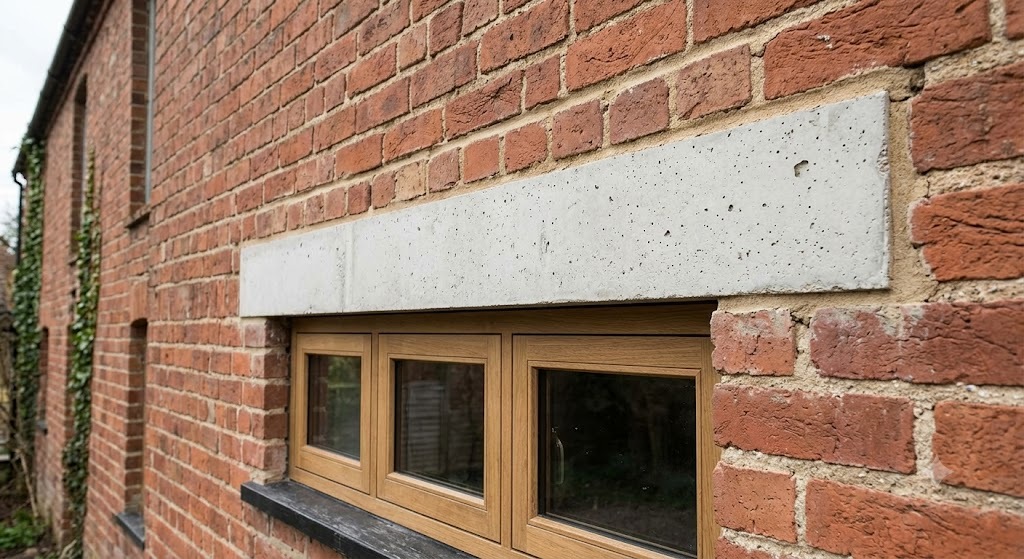
Above doors, windows, or wall openings, you will often find lintels sitting there, carrying the load of what sits above and redirecting the weight to the surrounding structure.
Not finding the right type of lintels can cause cracking or sagging. That’s why the Joseph Parr Bradford team has put together this guide that looks at the practical differences between steel and concrete lintels, so you can choose the right lintel for your job.
We’d like to note that the article is for general guidance only. Always consult a structural engineer or qualified professional for project-specific advice.
Steel Lintels
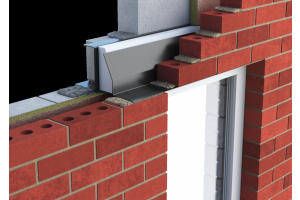
Steel lintels are pressed from galvanised steel and come in several profiles to suit different wall constructions.
L-shape, box section, and catnic profiles are some of the more common types.
Steel lintels can handle spans of 4.8m and beyond, depending on the profile, making them the go-to for wider openings where a concrete lintel would be impractical.
They come with handling advantages. Because they are pressed steel rather than solid concrete, most steel lintels can be lifted and positioned by one person. On upper floors or in tight access situations, this is a real benefit. They are also self-supporting once placed, so no temporary propping is needed during bricklaying.
Concrete Lintels
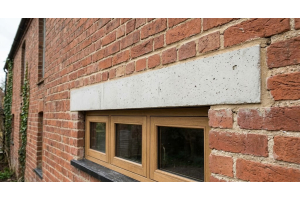
Concrete lintels come in precast and prestressed forms. The former are delivered ready to use, excellent for domestic openings, and usually available in sizes like 100x65mm (suitable for light loads and smaller spans) and 100x150mm (for greater depth and load capacity).
Prestressed concrete lintels have steel wire or strand tensioned through the concrete during manufacture. This prestress counteracts the bending forces the lintel experiences under load, meaning you get a stronger lintel relative to its size. Prestressed lintels are better suited to longer spans and heavier loads than standard precast.
In terms of sizing, standard precast concrete lintels are usually found in lengths ranging from 600mm to 3000mm in 150mm to 300mm increments. Concrete lintels sizes of 100x65mm and 100x150mm are the most common cross-sections you will encounter for domestic work.
Propping: Concrete lintels generally need temporary propping during installation until the mortar beds above have fully cured. This is an important consideration when planning your build sequence.
Steel vs Concrete Lintels: Side-by-Side
Factor | Steel Lintel | Concrete |
Weight | Lighter; easier on upper floors | Heavier; typically two people needed |
Typical spans | Up to 4.8m+ (profile dependant) | Up to 3m for standard domestic precast |
Cavity wall use | Yes; profiles for inner and outer leaf | Generally inner leaf only |
Self-supporting | Yes during installation | Requires temporary propping |
Cost | Higher unit cost | Lower unit cost |
Best for | Cavity walls, wider openings | Standard domestic openings |
Which Lintels Should You Choose?
Choose a steel lintel if:
You are building a cavity wall and need a single lintel to bridge both leaves
The opening is wider than 2.4m
Access is difficult, or you are working at height and need one person to handle the lintel
You want to avoid the time and cost of temporary propping
Choose a concrete lintel if:
The opening is a standard domestic size (up to around 2.1m to 2.4m)
You are working on an inner leaf or a solid single-leaf wall
Cost is the primary driver and the span allows it
You are comfortable with the propping requirement
Steel lintels tend to be the common option in modern cavity wall construction in the UK, and concrete lintels remain a practical and cost-effective lintel for straightforward domestic openings in which the wall type and wall span suit them.
Working Out the Lintel Length You Need
The formula is simple: measure the clear span of the opening and add the required bearing at each end.
For steel lintels, the minimum end bearing is typically 150mm each side. So for a 1200mm opening, you need at least a 1500mm lintel.
For concrete lintels, manufacturers generally specify a minimum bearing of 100mm either side for standard domestic spans, though 150mm is recommended for larger spans or heavier loads. Always check the manufacturer's datasheet for the specific product that you are using.
If in doubt, go longer. Undersized bearings are one of the most common causes of lintel failure.
Steel and Concrete Lintels at Joseph Parr Bradford
Hopefully, you now have a clearer understanding of steel and concrete lintels. If you’re looking for advice, contact us, or order your lintels online at Joseph Parr Bradford.
Frequently Asked Questions
Which lintel is better for a cavity wall?
Steel lintels are the standard choice for cavity walls. Profiles such as Catnic span both the inner and outer leaf in a single unit, simplifying installation and providing a continuous support across the full wall width.
What is the maximum span for a concrete lintel?
Standard precast concrete lintels are generally suitable for spans up to around 3m in domestic applications. Beyond that, or for heavier loads, you would typically move to a prestressed concrete lintel or switch to steel.
Do concrete lintels need propping during installation?
Yes. Concrete lintels require temporary propping until the mortar above has hardened sufficiently to carry the load. Steel lintels are self-supporting and do not need propping.
What is the minimum bearing length for a steel lintel?
The standard minimum end bearing for a steel lintel is 150mm on each side of the opening. Always check the specific product data for the lintel you are using, as some profiles have different requirements depending on span and load.