
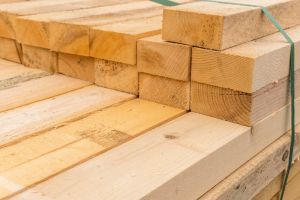
In the construction trade, you will hear about rough sawn timber often, as it lies at the very beginning of the timber processing journey and plays a vital role in how wood is chosen, prepared, and utilised on-site or in the workshop. Prior to the refining and smoothing of timber, it starts as raw, otherwise known as rough sawn timber. Ready to find out more about the advantages of using rough sawn timber in your next project? This guide will break it down.
What is Rough Sawn Timber Used For?
Rough sawn timber is often chosen when appearance isn’t the priority, and the main requirements of the project relate to strength, practicality, and cost efficiency.
It is cut straight from the log without being smoothed or finished, which makes it a fantastic choice for hidden and structural projects.
A wide array of construction projects rely on rough sawn timber, namely floor joists, roof rafters, stud walls, and general framing. Builders commonly pick these sections when they are working with timber that will be concealed behind plasterboard, flooring, or cladding.
You will also find that it features in many outdoor structures, such as sheds, fencing, and agricultural buildings, where a natural finish works and the structure's robustness is paramount.
What Are the Advantages of Rough Sawn Timber?
A key motivating factor behind many projects using rough sawn timber is its excellent balance of performance and affordability. With this type of timber going through minimal processing, it retains lots of its original strength and character, meaning it can stand up to demanding structural roles.
It’s fairly straightforward to adapt rough sawn timber on site because it can be cut, planed, or adjusted as required for specific jobs.
Rough sawn timber advantages:
It is more effective than planed timber due to less processing
It’s robust, which makes it perfect for load-bearing applications
The textured surface of this timber provides superior grip for fixings
Planing or machining can be carried out to customise the timber
It is often available in larger section sizes
How Does Planed Timber Differ From Rough Sawn Timber?
When differentiating between planed and rough sawn timber, the main variables are related to the finish and the accuracy of the dimensions.
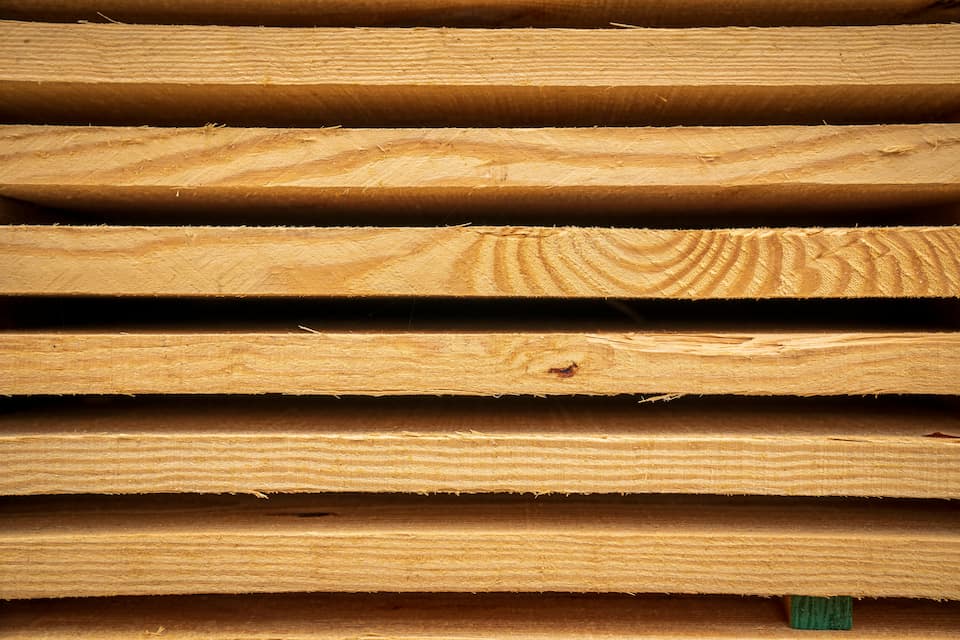
There is a coarse surface, accompanied by slightly irregular edges, when it comes to rough sawn timber. This contrasts with planed timber, which is machined smooth on all sides and cut to consistent sizes.
For visible applications such as furniture and shelving, planed timber is more likely to be chosen, as appearance and precision are important. With regard to rough sawn timber, it is preferred for structural work or when something ends up covering it.
Regularised carcassing is an example of something that sits somewhere between the two, providing smooth faces and consistent sizes, while also being ideal for construction.
How to Plane Rough Sawn Timber
A simple way of achieving a smoother finish or more accurate dimensions is by planing rough sawn timber, which you can do using hand tools or machinery, depending on the size and scale of the project.
The process usually starts by inspecting the timber for twists, bows, or defects. One face is planted flat first, followed by an adjacent edge that creates a true reference corner. After these have been established, the rest of the faces can be planed to size. This is a smart approach that enables your rough sawn timber to be transformed into a more refined material while retaining its original strength and flexibility.
Looking for Timber Advice?
Rough sawn timber is an excellent choice if you are simply searching for reliability and robustness and aren’t prioritising appearance as much.
If you’d like to find out more about timber and ask for advice on which one would be best for your project, feel free to get in touch with us. We will help you complete your project successfully.